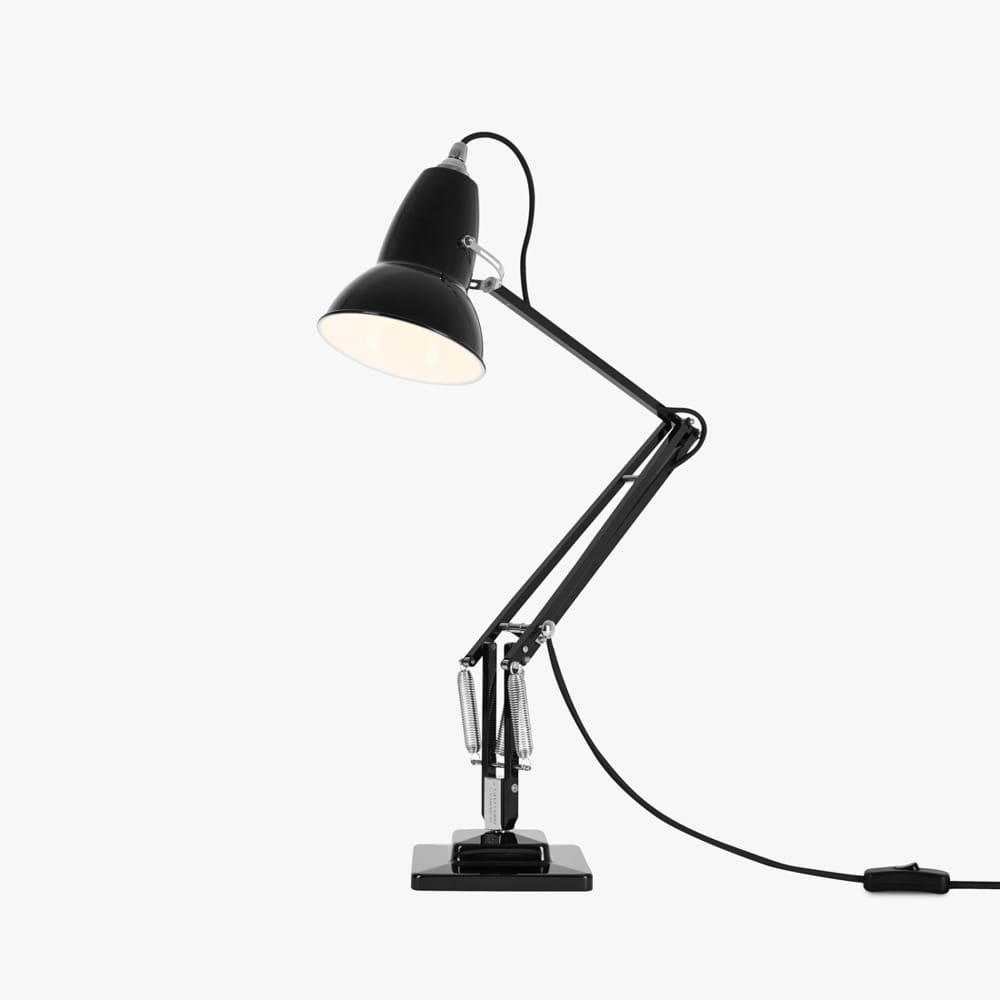
GEORGE CARWARDINE, 1932

OBJECT
The Anglepoise Original 1227 table lamp is a classic in design history, an object that defined the archetype of the spring-balanced desk lamp.
This desk lamp is archetipe and represents 1930s English rationalism – a design classic renowned for its functionality, elegance, and aesthetic strength.
The innovation of the Anglepoise was the use of a spring system (unlike the counterweight systems used until then) for a table lamp, creating a new lighting typology that continues to be copied and reinterpreted by manufacturers and designers to this day.
HISTORY OF Anglepoise 1227 Original
Like many other examples of human ingenuity, the Anglepoise lamp was created by chance during experiments intended for a completely different product. It was 1932, and George Carwardine, an automotive designer, was experimenting with a spring system that could be used as car suspension.
The resulting spring system had two unique properties: it could be moved and adjusted with great ease while simultaneously maintaining its position.
These characteristics led Carwardine to realize that the spring tension system could be useful for other commercial purposes, such as a work lamp (for many years it was believed that Carwardine was inspired by the tension system of arm muscles to design the Anglepoise arm, but this theory has since been debunked).
In 1935, Carwardine partnered with Herbert Terry and Sons, who began producing the Anglepoise. Terry handled production, marketing, and sales, while Carwardine focused on developing new models.

Initially, the Anglepoise 1227 was designed as a work lamp and quickly became popular in hospitals, workshops, and offices. During World War II, the Anglepoise was used in trains and aircraft, notably installed in the Royal Air Force’s warplanes.
One often-repeated anecdote about the lamp involves the discovery of an airplane wreck in Loch Ness by an American team searching for the famous Nessie. Instead of the monster, they found a Vickers Wellington aircraft submerged but in surprisingly good condition. After installing a new battery, the Anglepoise lamp, submerged for 40 years, began working again.
Over time, the lamp also found its way into British homes (and soon across Europe) thanks to its affordability, practicality, and elegance, becoming one of the most popular reading lamps worldwide.
Anglepoise: AWARDS
Over the years, the famous spring-balanced lamp has been developed and updated, with the current model using modern materials that meet today’s sustainability standards.
Anglepoise has also created various table lamp models, many of which have been highly successful. The most famous is undoubtedly the Anglepoise 75, widely recognized for being part of the Disney Pixar logo (although some argue it is the Norwegian counterpart, Luxo).
Today, the Anglepoise lamp is featured in some of the world’s most prestigious design museums, such as the Design Museum in London, and is considered the archetype of the desk lamp.
KEEP READING
DETAILS
Produced by British brand Anglepoise
Lampshade Diameter: 14 cm
Lampshade Height: 16 cm
Maximum Reach from Base to Lampshade: 90 cm
Base Diameter: 15 cm
Cable Length: 200 cm
Gloss paint finish
Aluminum lampshade
Chrome fittings
Cast iron base
Fabric-covered cable
Anglepoise® constant tension spring technology