GIO PONTI, 1932

OBJECT
The Bilia lamp was designed by the renowned Italian architect Gio Ponti in 1932 for Fontana Arte, one of the most cutting-edge Italian lighting companies of the time (and which continues to maintain its status as a major producer of Italian design today).
Bilia is a classic of Italian design from the first half of the 20th century, as its composition encapsulates Gio Ponti’s entire artistic vision.
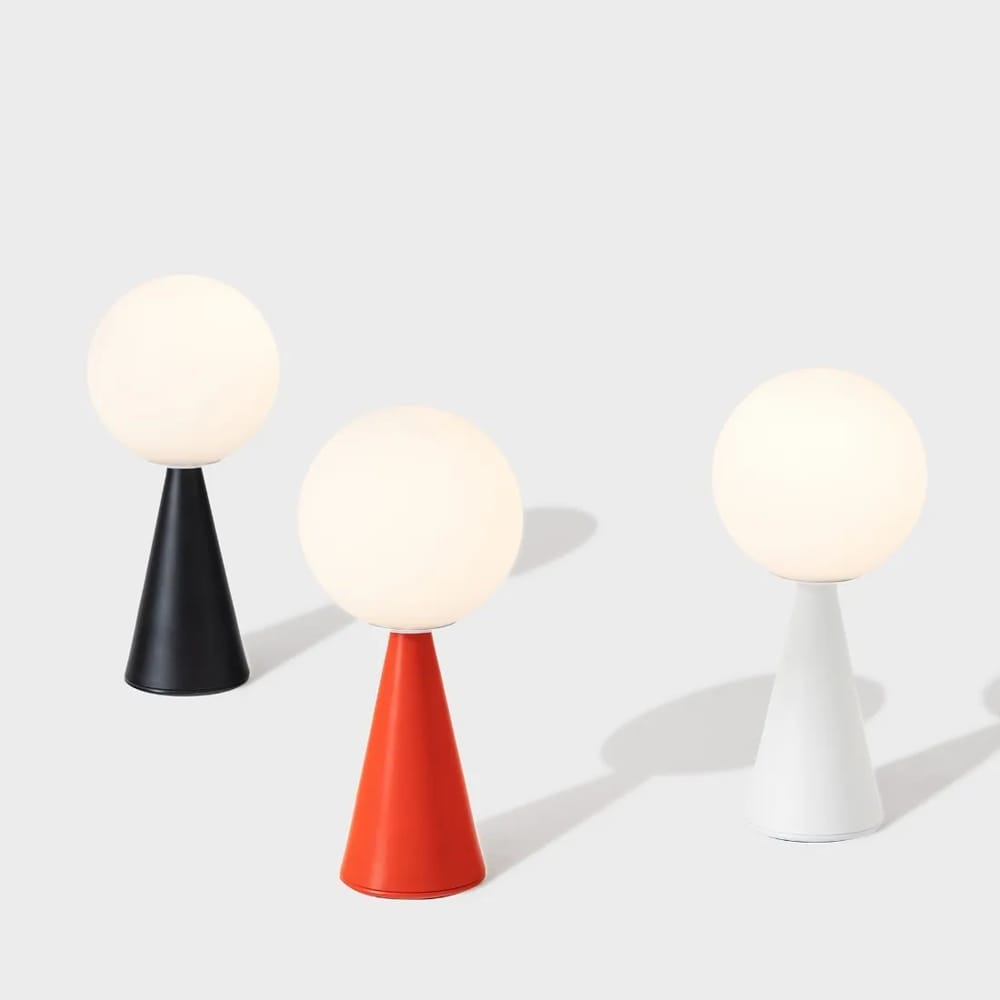
Like magic, pure geometric forms such as the cone and sphere come together to create an object of great formal elegance. The contrast between the two shapes and the balance of proportions, combined with the choice of non-reflective materials, led to the creation of a timeless classic that remains highly successful to this day.
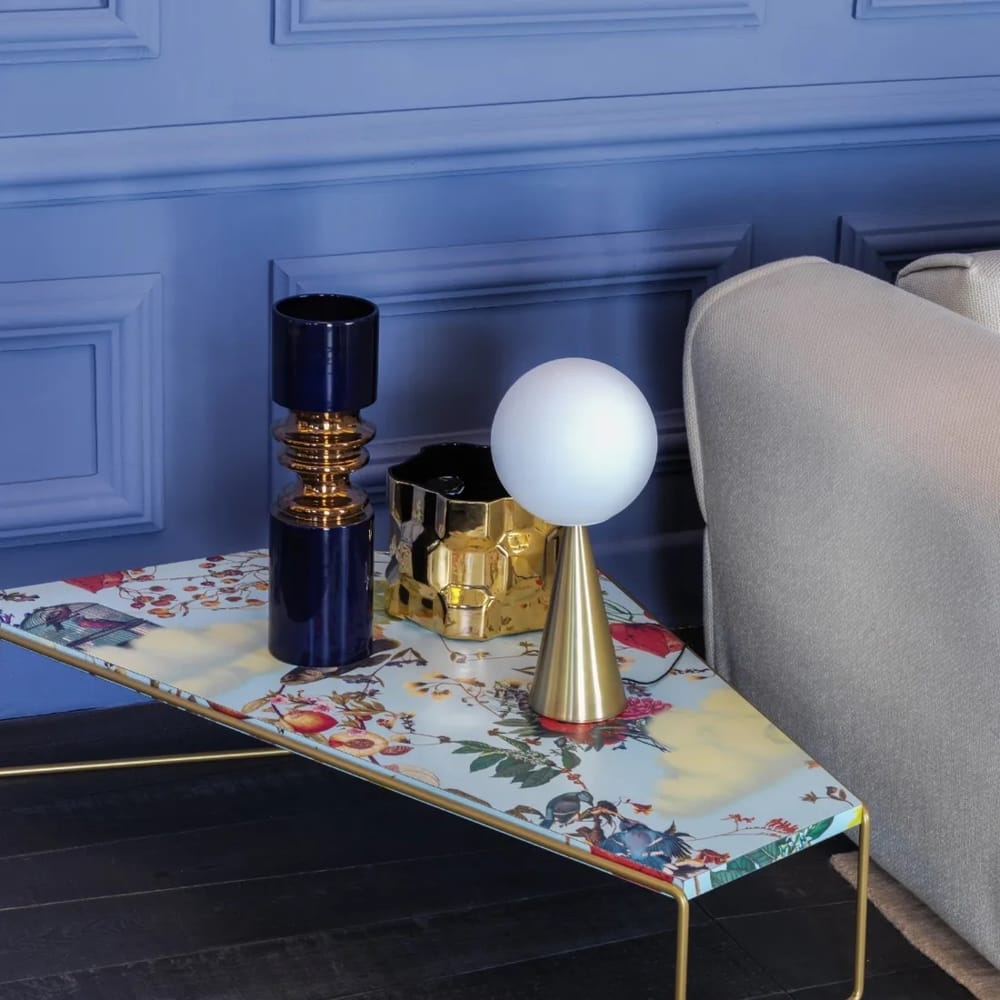
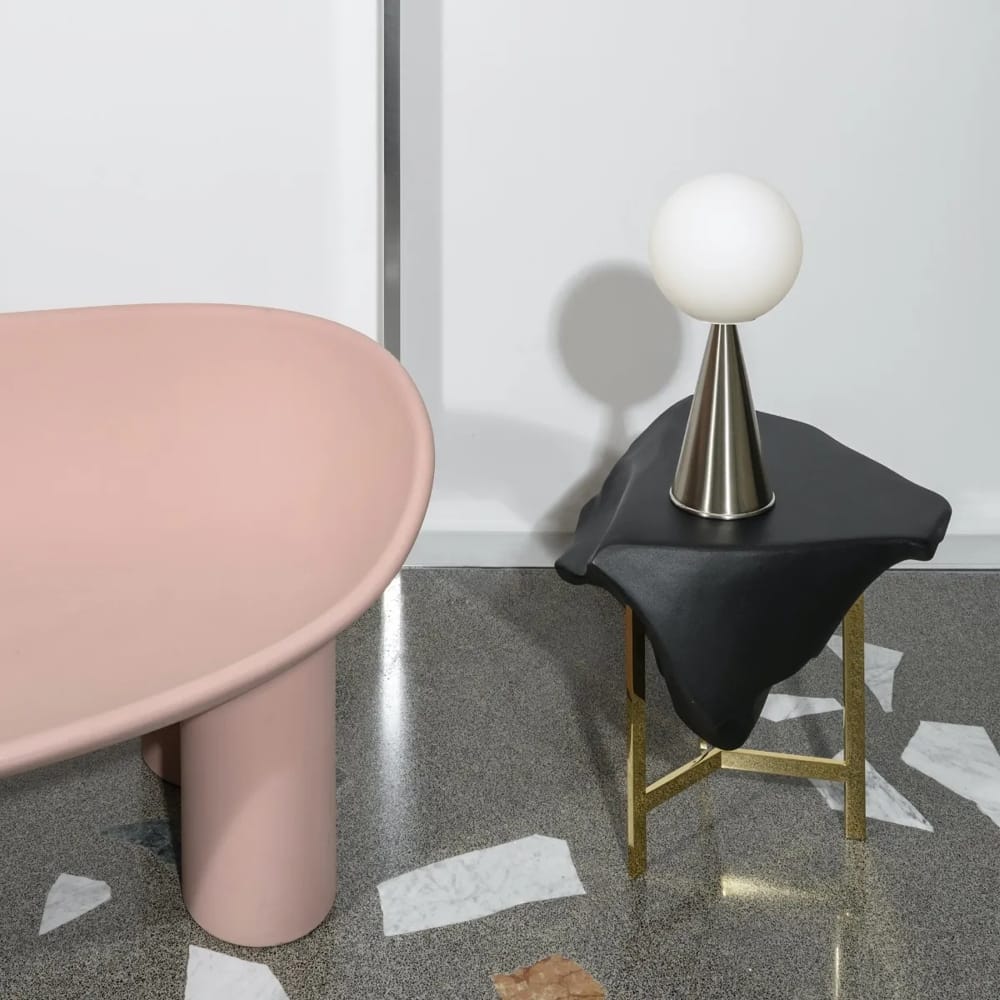
In terms of colors and materials, Ponti designed two versions of the lamp, both with a metal base, either in nickel or brass. The spherical diffuser is made of white satin-finished blown glass, and the light it emits further enhances the compositional perfection of this design object.
Over the years, FontanaArte has continued to produce the Bilia lamp without interruption (except for breaks during wartime), demonstrating the enduring popularity of the product, which ranks among the long-sellers of Italian design. Over time, the production techniques and materials for the Bilia lamp have evolved to meet contemporary sustainability standards.
When designing Bilia, Gio Ponti also envisioned a smaller-scale version with a range of “spray-painted colors.” Based on these sketches, FontanaArte now also produces the Bilia Mini, a smaller version with a metal base in, contemporary colors.
BILIA TABLE LAMP AND GIO PONTI'S PRICNIPLES
As highlighted by design historians Domitilla Dardi and Vanni Pasca in their book Manual of Design History, Ponti saw two main enemies: the “false antique” dominating Italian furniture production with historical styles, and the “ugly modern,” a homogenizing rationalist trend that erased local histories and traditions.
Ponti’s designs, whether in handcrafted furniture or mechanized series, successfully merged aesthetics with innovation, modernity with tradition, achieving his goal of creating a “neutral” product, free from historical or artistic affiliations.
RECOGNITION
The Bilia lamp, along with the iconic Superleggera chair for Cassina, is considered one of the great classics of Italian design. Together with Max Ingrand’s Fontana lamp and Gae Aulenti’s Table with Wheels, it has contributed to the success and longevity of FontanaArte.
Bilia is part of the world’s most prestigious design collections, such as that of the Triennale di Milano, which Ponti helped to establish.
Gio Ponti

Gio Ponti, born in Milan in 1891, was an architect, designer, and founder of the magazine “Domus.” A pioneer of modern design, he profoundly influenced international architecture and design. Among his most famous projects are the Bilia lamp for FontanaArte, the Superleggera chair for Cassina, and his collaboration with Richard Ginori in artistic ceramics.
FontanaArte

Founded in Milan in 1881, FontanaArte is primarily dedicated to lighting but extends beyond it. The company boasts a rich history, with artistic directors of the caliber of Gio Ponti, Pietro Chiesa, Max Ingrand, and Gae Aulenti leading from 1932 onwards. This era saw the creation of timeless design icons such as the Bilia, Luminator, and Fontana lamps, as well as the famous Tavolo con Ruote.
CONTINUE READING
DETAILS
FontanaArte
Bilia:
Diameter: 20 cm
Height: 43 cm
Bilia Mini:
Diameter: 12 cm
Height: 26 cm
Construction materials: glass and metal
Light source: max 46W E14 bulb