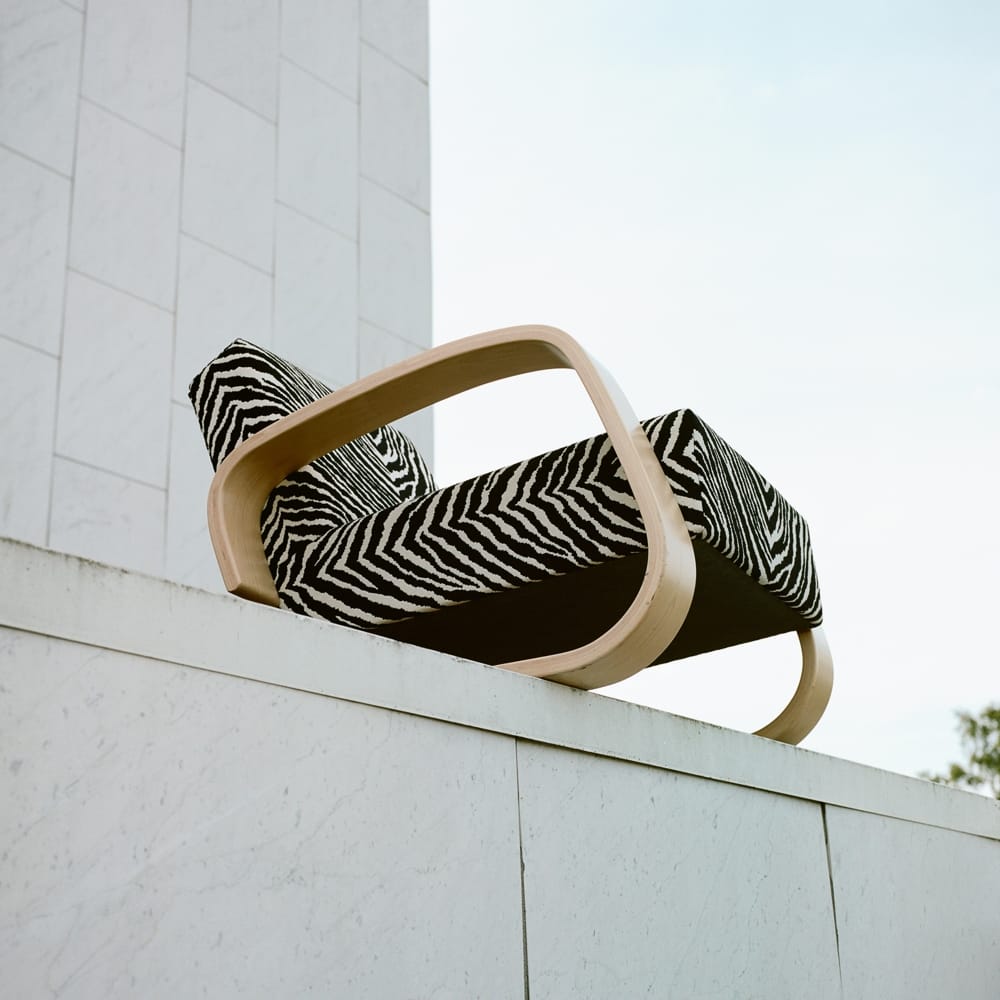
ALVAR AALTO, 1936

Object
The Tank Armchair, designed by Alvar Aalto in 1936 for the Milan Triennale, marked a turning point in his design approach. More robust and voluminous than his previous works, it stands out for its wide, curved birch armrests and springy cantilevered frame, ensuring both comfort and flexibility.
Its name comes from its solid, imposing form, while its success at the Triennale cemented Aalto’s international reputation. Produced by Artek since 1935, the Tank Armchair remains a modern design icon, celebrated for its versatile upholstery options and timeless appeal.
Design Approach, Materials

ARTEK AND THE SUCCESS OF AALTO'S FURNITURE
Artek played a very important role in the success and long-standing popularity of the Tank Armchair. Founded in 1935 by Alvar and Aino Aalto, Maire Gullichsen, and Nils-Gustav Hahl, Artek aimed not only to sell furniture but also to promote modern living and spread Nordic functionalism internationally.
The first Artek store, opened in Helsinki in 1936, became a key venue for showcasing Aalto’s work, including the Tank Armchair. Artek also organized international exhibitions, strengthening the reputation of Aalto’s designs. The company managed both production and distribution, ensuring high-quality production, a key factor in the chair’s lasting success.
Since then, the Tank Armchair has become part of some of the world’s most prestigious design collections, including the MoMA in New York and many others.
Alvar Aalto

Alvar Aalto (1898-1976), Finnish designer and architect, revolutionized design with his bent wood technique. He is famous for the Paimio chair, designed in 1932, and the Savoy vase of 1936, which reflect an organic design inspired by nature. As the cofounder of Artek, Aalto integrated functionality and aesthetics, profoundly influencing modern and Scandinavian design.
Artek

Artek is a Finnish design company founded in 1935 by Alvar and Aino Aalto, Maire Gullichsen, and Nils-Gustav Hahl. Originally established to market Aalto’s furniture, it also aimed to promote modern living through exhibitions and education. Today, Artek continues to produce and distribute iconic designs with a strong architectural identity.
KEEP READING
Details
Produced da Artek
The original version of the Tank Armchair is availble at Artek.fi >
- Width: 77 cm
- Depth: 77 cm
- Height: 65 cm
- Seat depth: 58 cm
- Seat height: 37 cm
- Armrest height: 51 cm
- Frame material: Steam-bent solid birch lamella with walnut stain
- Seat cushion: Seat with zig-zag springs, polyurethane foam, polyester